Best Ev Charger Options for Global Buyers in 2026?
As the global demand for electric vehicles grows, the need for reliable EV chargers is becoming critical. According to a report by the International Energy Agency, electric vehicle sales are projected to reach 30 million units by 2026. This surge means more infrastructure is necessary to support EV owners. Charging stations are pivotal in this transformation towards sustainable transport.
Several factors will influence the choice of EV chargers in 2026. Compatibility, charging speed, and availability rank high on the list. A study by Bloomberg New Energy Finance stated that rapid chargers can fill a vehicle’s battery to 80% in about 30 minutes. Yet, the accessibility of these chargers remains a challenge. Many areas still lack adequate infrastructure. Furthermore, buyers are often confused by varying standards and technologies.
As the industry evolves, buyers must prioritize trusted manufacturers. EV charger brands known for innovation and reliability will stand out. There’s an ongoing need for education in this space. Buyers should be aware of local options that cater to their specific requirements. Understanding these factors can empower consumers to make informed decisions.
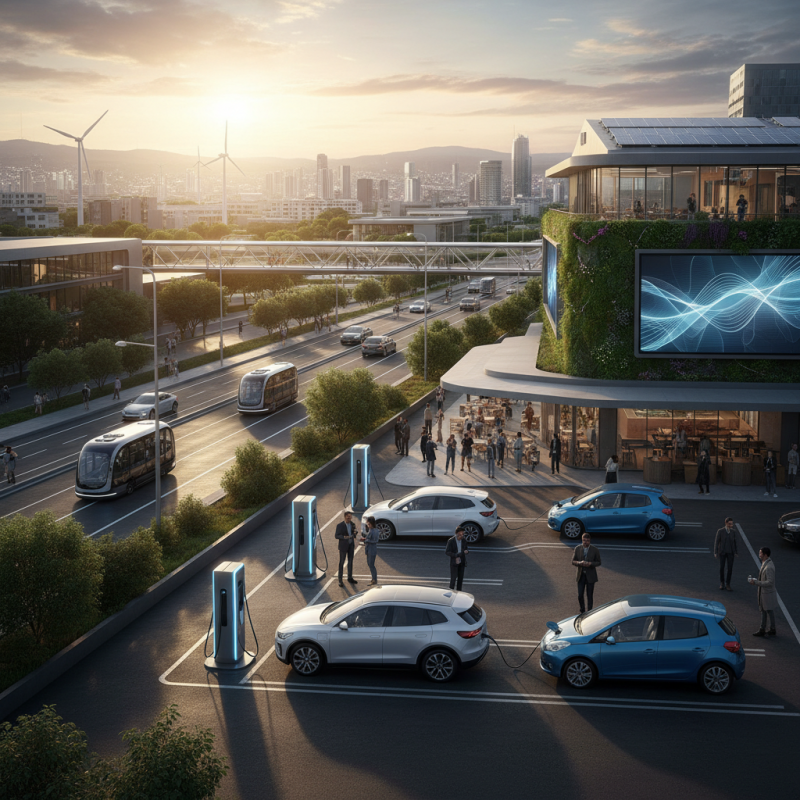
Best Ev Charger Options for Global Buyers in 2026: Key Market Trends
As the demand for electric vehicles (EVs) grows, so does the need for efficient charging solutions. In 2026, global buyers will prioritize chargers that offer rapid charging capabilities and advanced connectivity features. The integration of smart technology will enable users to monitor battery levels and charging history. This makes it easier to plan trips and use energy efficiently.
Many consumers are interested in home charging stations that provide convenience. Some prefer public chargers due to their flexibility. However, the accessibility of charging networks can vary significantly. This gap highlights the need for improvements in installation and infrastructure. Reliability is key; users want chargers that work consistently across different regions.
Market trends also point to sustainability. Consumers are increasingly seeking eco-friendly options in their charger choices. Solar-powered chargers are on the rise, catering to environmentally conscious buyers. Additionally, energy management systems will allow users to optimize their electricity use, reducing costs and carbon footprints. As the market evolves, consumer needs will drive innovation in the EV charging sector.
Overview of Electric Vehicle Market Growth Projections for 2026
The electric vehicle (EV) market is experiencing rapid growth. In 2026, the global demand for EVs is projected to surge significantly. This trend reflects a broader commitment to sustainability and reducing carbon emissions. Governments are implementing favorable policies to spur this growth, but challenges remain.
Charging infrastructure is a critical component of this transition. More charging stations are necessary to support increasing EV ownership. However, the construction and maintenance of these stations often lag behind vehicle sales. This gap could pose a barrier to adoption. Solutions must be developed to ensure accessibility and convenience for users.
As we approach 2026, consumer preferences will evolve. Range anxiety and charging speed are key concerns. Buyers want reliable, fast charging options. Addressing these issues will be vital for the market's health. Stakeholders need to prioritize technology advancements and accessibility to fulfill growing consumer expectations. The road ahead is filled with opportunities and obstacles alike.
Best Ev Charger Options for Global Buyers in 2026
| Charger Type |
Charging Speed (kW) |
Compatibility |
Estimated Cost ($) |
Market Growth (%) |
| AC Level 2 |
7.2 - 22 |
Universal |
500 - 1,500 |
15% |
| DC Fast Charger |
50 - 150 |
CHAdeMO, CCS |
10,000 - 40,000 |
30% |
| Home Charger |
3 - 7.2 |
NEMA 14-50 |
300 - 1,200 |
12% |
| Portable Charger |
1.4 - 3.6 |
Universal |
200 - 500 |
10% |
Types of EV Chargers: Level 1, Level 2, and DC Fast Charging Explained
When considering the best EV charger options for 2026, understanding the types available is crucial. The three main types are Level 1, Level 2, and DC Fast Chargers. Level 1 chargers use a standard 120V outlet, providing around 4-5 miles of range per hour. They require minimal setup, making them convenient for home use. However, for those who drive frequently, relying solely on Level 1 may not meet daily needs.
Level 2 chargers operate at 240V, delivering about 20-25 miles of range per hour. This type is ideal for homes with heavier use and public charging stations. The widespread adoption of Level 2 chargers has been supported by the International Energy Agency, which reports that they are pivotal in expanding charging infrastructure globally.
DC Fast Charging is the quickest option, providing 60-80 miles of range in just 20 minutes. While they are less common, their presence is increasing at highway stations, ensuring longer trips are feasible. The growth of DC Fast Charging options aligns with data from BloombergNEF, predicting a significant increase in fast charger installations in urban areas by 2026.
Tip: Assess your daily driving habits before choosing a charger. If you often drive long distances, investing in a DC Fast Charger may be wise.
Tip: Check local incentives for installing Level 2 chargers at home. Many governments offer financial support for the installation of electric vehicle infrastructure.
EV Charger Types and Their Charging Speeds (2026)
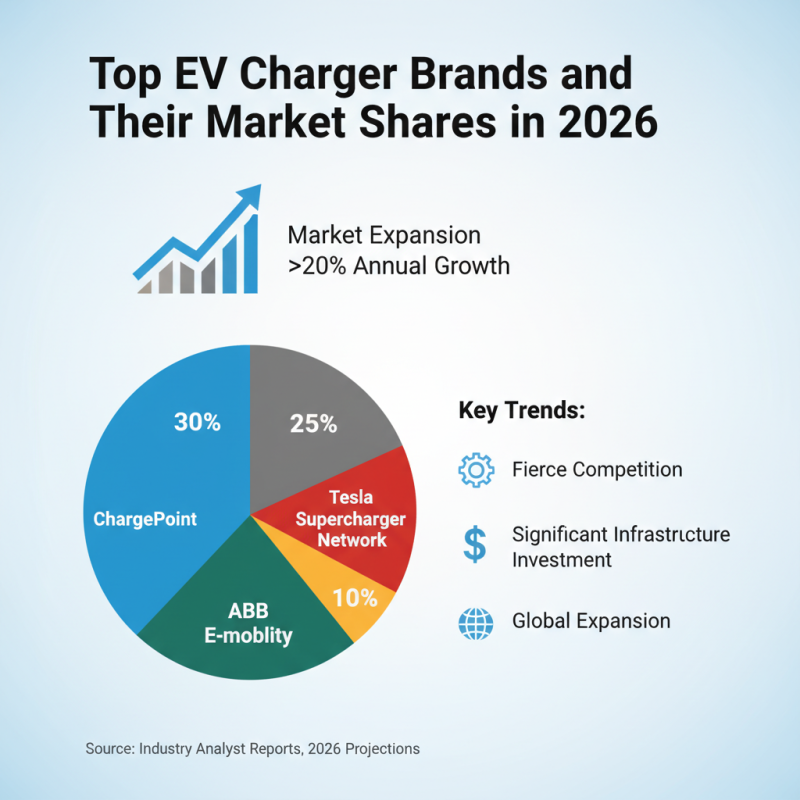
Top EV Charger Brands and Their Market Shares in 2026
In 2026, the EV charging market is set to expand significantly. Analysts predict a growth rate of over 20% annually. The major players in this field are competing fiercely for market share. Reports indicate that significant investments in infrastructure will bolster these efforts.
Market analysis shows that the top brands hold roughly 60% of the global market share. Their innovative technologies and diversified product ranges attract consumers. However, there are still notable gaps in customer service that need improvement. Responses to inquiries take longer than ideal, which can frustrate users.
Tips: When choosing an EV charger, consider install costs and compatibility with your vehicle. Research local charging station availability. Understanding the total cost of ownership is essential. Potential buyers should also monitor warranty options, as these can vary greatly.
Factors Influencing Buyer Preferences for EV Chargers Globally
When looking at EV charger options for 2026, various factors shape buyer preferences globally. One critical consideration is charging speed. Many buyers favor fast chargers that reduce downtime. Charging solutions must balance speed with safety and efficiency. High charging speeds can lead to overheating. Hence, buyers should research the cooling mechanisms of chargers.
Another vital factor is compatibility. Buyers need chargers that work with multiple EV models. It's crucial to check specifications before purchasing. A versatile charger saves money in the long term. However, not all chargers support every vehicle. This inconsistency can be frustrating.
Tips:
1. Always read user reviews. They provide insights into real-world performance.
2. Consider future needs. An upgrade may be needed as technology advances.
3. Factor in installation costs when budgeting. Installation complexity varies widely.